
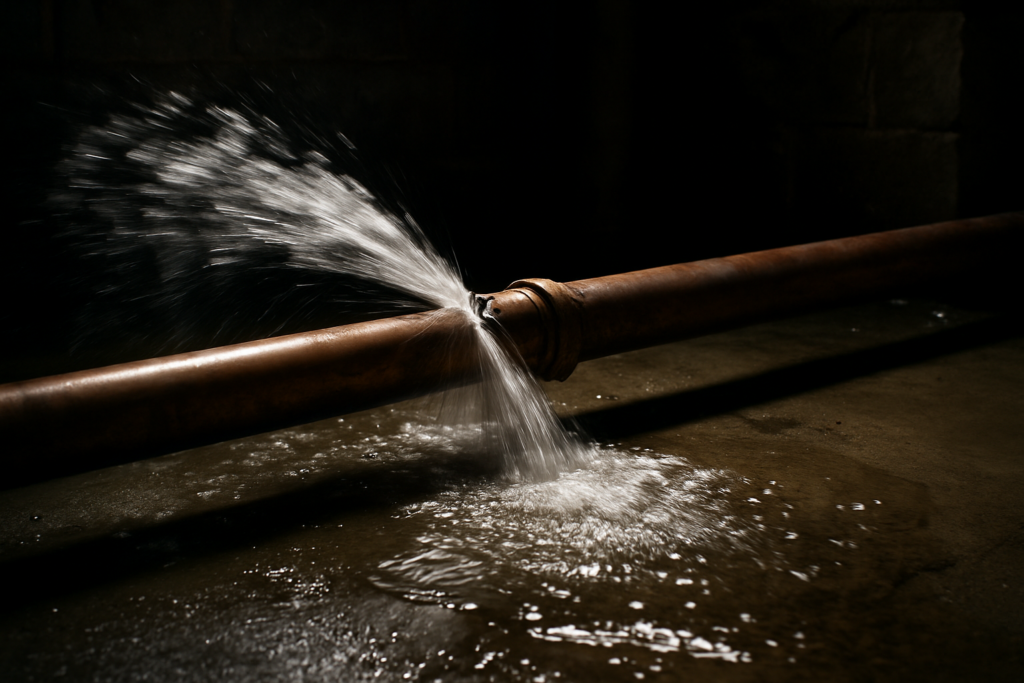
A burst pipe is one of the fastest-moving emergencies in a home. Water pressure means that even a small rupture can release hundreds of litres in minutes. What you do in the first 30 minutes determines how much damage you end up with.
This guide covers exactly what to do, step by step. Read it now, before you need it.
Step 1: Shut Off the Water Immediately
Your first priority is stopping the flow. Find your main water shutoff valve and turn it off.
In most Toronto homes, the main shutoff is in the basement — typically near the front wall of the house, close to where the main supply line enters from the street. It is usually a gate valve (a wheel-style handle) or a ball valve (a lever that turns 90 degrees to close).
Turn a gate valve clockwise until it stops. Turn a ball valve so the lever is perpendicular to the pipe.
If you cannot locate the main shutoff, call ED Plumbing at (437) 260-6342 immediately. Do not try to find it while water is actively flooding. Know where your shutoff is before an emergency — it should take less than 30 seconds to reach it.
Step 2: Turn Off the Hot Water Heater
Once the main water is off, turn off your water heater. On a gas heater, set the thermostat to “Pilot.” On an electric heater, turn off the breaker. If the water heater continues heating without a water supply, it can be damaged.
Step 3: Open Cold Taps to Drain the System
Open cold taps throughout the house to drain remaining water from the pipes. This reduces pressure and gets the water out of the system rather than through the burst.
Leave the taps open until the water stops flowing completely.
Step 4: Turn Off Electricity in Affected Areas
Water and electricity are the most dangerous combination in a home emergency. If water has reached any electrical outlets, light fixtures, appliances, or the electrical panel, turn off the breaker for those areas immediately.
If you are unsure whether an area is safe, do not enter it. Wait for a professional.
Step 5: Contain the Water — Start Damage Control
While waiting for a plumber, slow the spread:
- Move valuables, electronics, and furniture away from the water
- Place towels or buckets to collect dripping water
- If the burst is visible and accessible, you can temporarily wrap it tightly with a pipe repair clamp or even a thick cloth and duct tape — this buys time but is not a permanent fix
- Open windows to start drying out the space if it is safe to do so
Step 6: Document the Damage for Insurance
Before any cleanup begins, take photos and video of everything: the burst pipe location, standing water, damaged property, and any visible structural damage. Most home insurance policies in Ontario cover sudden water damage from a burst pipe, but they require documentation before you start repairs.
Call your insurance company as soon as the immediate emergency is handled.
Step 7: Call a Licensed Plumber
A burst pipe is not a DIY repair. Even if you can see exactly where the pipe broke, replacing or repairing it properly requires the right tools, correct fittings, and knowledge of your pipe material — copper, PEX, CPVC, and galvanized steel all require different repair methods.
In Toronto, plumbing work on the water supply system must be done by a TSSA-licensed plumber. Unpermitted repairs can create problems when you sell the home or if a subsequent failure causes a claim.
Why Pipes Burst in Toronto Homes
Understanding the cause helps prevent a repeat occurrence:
Freezing: The most common cause in Ontario winters. Water expands as it freezes, which builds pressure inside the pipe until it fails. Pipes along exterior walls, in unheated crawl spaces, and in uninsulated garage walls are highest risk.
Corrosion: Many Toronto homes built before 1980 still have galvanized steel or cast iron supply pipes. These corrode from the inside over decades, eventually thinning to the point of failure. The burst is often sudden and happens on a section that looked fine from the outside.
High water pressure: Normal residential water pressure is 40 to 80 PSI. Pressure above that range stresses joints and fittings. If you have had multiple unexplained pipe failures, have a plumber check your pressure.
Age and wear: Copper pipes typically last 50 to 70 years. PEX is newer and lasts longer. If your home’s plumbing is approaching or past its expected lifespan, proactive inspection is cheaper than an emergency repair.
After the Repair: What to Watch For
Even after a proper repair, monitor the affected area for several weeks. Watch for:
- Damp smells or visible mould, which indicate water that was not fully extracted
- Soft spots in walls, floors, or ceilings near the burst location
- Any repeat pressure loss or discolouration in the water supply
Structural drying after a significant burst often requires a dehumidifier running for 48 to 72 hours. If you had significant flooding, a water damage restoration company can assess whether drying is complete.
ED Plumbing Responds to Burst Pipes 24/7
If you have a burst pipe in Toronto or the GTA, call (437) 260-6342. We respond to plumbing emergencies around the clock. Our TSSA-licensed plumbers carry common pipe fittings and repair materials on every truck, so most burst pipe repairs are completed in a single visit.
Save our number before you need it.