
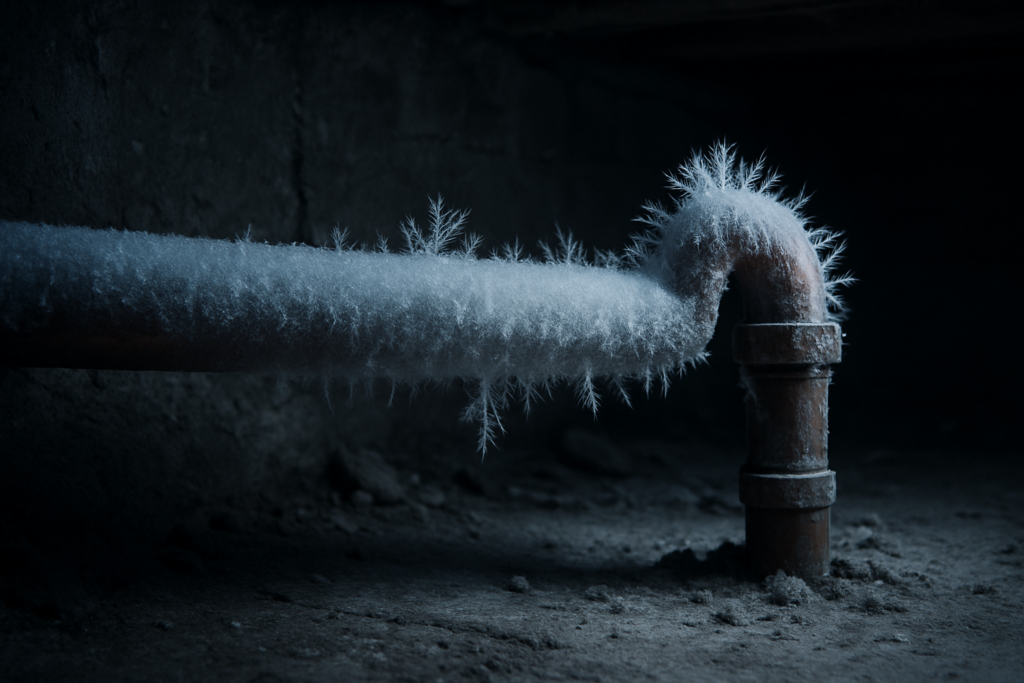
Pipes freeze when the temperature inside the pipe drops below 0 degrees Celsius for a sustained period. In Toronto, that risk is real from November through March, with the most dangerous conditions in January and February when overnight lows regularly reach -15 to -20 Celsius or colder.
A frozen pipe doesn’t just stop water flow — when water expands as it freezes, it creates pressure that can crack or burst the pipe entirely. The resulting flood, when the pipe thaws, is one of the most common causes of significant home water damage in Ontario.
Here is a practical checklist for preventing frozen pipes this winter.
The Highest-Risk Locations in Toronto Homes
Pipes don’t freeze uniformly. Focus your prevention efforts on these locations:
- Pipes along exterior walls: Any supply line running through a wall that faces the outside — particularly in older Toronto homes where insulation levels are below modern standards
- Pipes in unheated crawl spaces: Common in older bungalows and homes with additions
- Pipes in attached garages: Especially if a bathroom or laundry room was built above or adjacent to the garage
- Pipes under kitchen or bathroom sinks on exterior walls
- Outdoor hose bibs: The connection where garden hoses attach to the house
- Pipes in basement areas with poor heating coverage
Older housing stock in Toronto’s east end, Scarborough, and Etobicoke is particularly at risk, as many homes were built with supply lines closer to exterior walls and with insulation that no longer meets modern cold-weather performance.
Before Winter: The Prevention Checklist
1. Insulate Exposed Pipes
Foam pipe insulation from any hardware store costs roughly $1 to $3 per metre and takes minutes to install. Cover any pipe that runs through an unheated space, along an exterior wall, or in any area that gets cold in winter. Pay particular attention to where pipes enter and exit exterior walls — that gap is both a cold air pathway and a freezing point.
2. Disconnect and Drain Outdoor Hoses
Leave a garden hose connected to an outdoor tap in freezing temperatures, and the trapped water in the hose transfers cold back into the house supply line. Disconnect all hoses before the first sustained freeze. If your outdoor taps are frost-free models (they have a longer stem that shuts off inside the wall), they still require the hose to be disconnected to drain properly.
3. Shut Off and Drain Outdoor Irrigation
Your irrigation system supply line needs to be shut off at the indoor valve and blown out with compressed air before freeze-up. This is typically done by mid-October in Toronto. If you have not done this by late October, contact a plumber or irrigation specialist — doing it yourself without compressed air is not reliable.
4. Seal Gaps and Drafts Near Pipes
Cold air entering the house through gaps around pipes, dryer vents, electrical conduits, or foundation cracks can freeze adjacent plumbing even when the indoor temperature is well above freezing. Inspect and seal any air gaps near pipe locations using expanding foam sealant.
5. Know Where Your Main Shutoff Is
If a pipe does freeze and burst, the first thing you need to do is shut off the main water supply. Know where it is before you need it. In Toronto homes, the main shutoff is typically in the basement near the front of the house, at the point where the water supply enters from the street.
During Cold Snaps: Extra Precautions
During extended cold periods with overnight lows below -15 Celsius, take these additional steps:
- Keep cabinet doors open under kitchen and bathroom sinks that are on exterior walls. This lets the house’s heated air circulate around the pipes.
- Let cold water trickle from the tap connected to the most vulnerable pipe. Moving water doesn’t freeze as easily as standing water. Even a thin trickle is enough.
- Keep the thermostat no lower than 13 to 15 Celsius at night — even if you are away. The cost of a slightly higher heating bill is trivial compared to the cost of a pipe burst and water damage repair.
- Do not turn off your heat entirely if you go away for several days in winter. Set it to a minimum of 13 Celsius throughout the home.
If You Think a Pipe Has Frozen
Signs of a frozen pipe: a tap that produces no water or a very weak trickle, a visible frost or bulge on an exposed pipe, or a ticking/cracking sound in the wall during cold weather.
If you can reach the frozen section:
- Shut off the main water supply first, in case the pipe has already cracked
- Apply gentle heat using a hair dryer or heating pad — never an open flame or heat gun
- Start from the tap end and work toward the colder section
- Leave the tap open so water can flow as it thaws
If you cannot locate the frozen section, or if there is any sign of cracking or damage, call a plumber. Applying heat to an already-cracked pipe without the water being shut off will result in flooding the moment the ice plug thaws.
Call Before It Becomes an Emergency
The ideal time to address frozen pipe risk is now, before the cold arrives. Pipe insulation, gap sealing, and identifying your shutoff valve location take a few hours and cost very little.
ED Plumbing serves Toronto and the GTA. If you have pipes that have frozen in previous winters, or if you want a plumber to assess vulnerable areas in your home before the cold season, call (437) 260-6342. We also respond 24/7 to burst pipe emergencies throughout the winter months.