
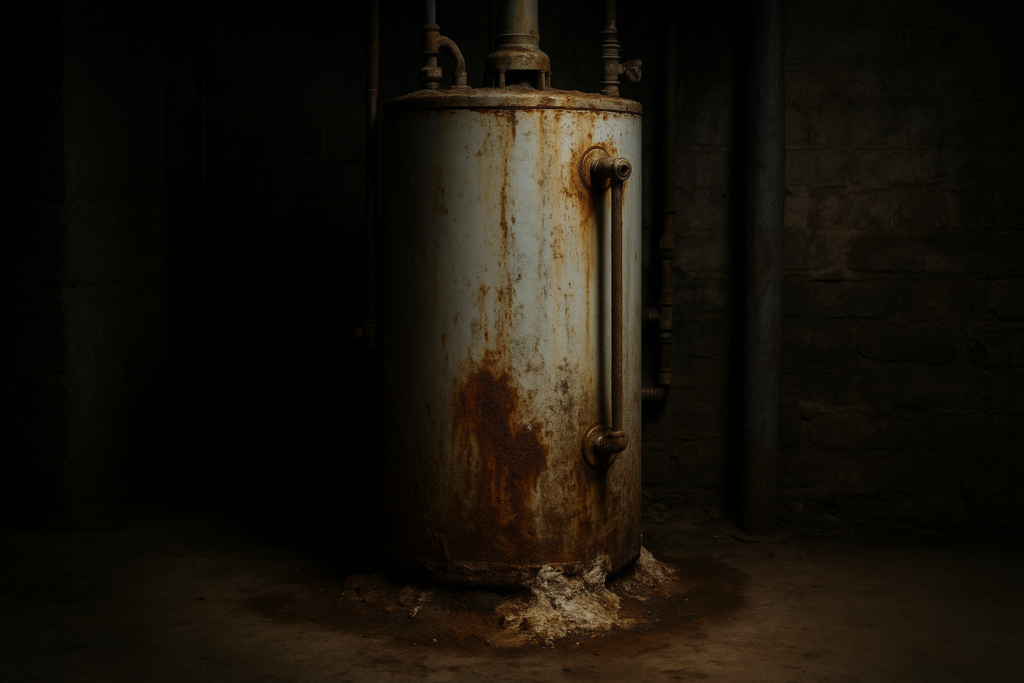
Most water heaters fail on a predictable schedule — they just don’t announce it clearly. A tank water heater in a Toronto home typically lasts 8 to 12 years. A tankless unit can last 15 to 20. When either starts approaching the end of its life, it gives off a set of consistent warning signs before it fails completely.
Catching those signs early means you choose the timing and cost of the replacement. Ignoring them means the heater chooses for you, usually at 6am on a January morning.
1. You’re Running Out of Hot Water Faster Than Usual
If your morning shower turns cold before you finish, or the dishwasher cycle is pulling from a tank that’s already depleted, your water heater is struggling.
The most common cause is sediment buildup. Over years of operation, minerals from Toronto’s hard water — particularly calcium carbonate — settle to the bottom of the tank. This layer insulates the water from the heating element, forcing the heater to work harder to produce less hot water. The effective capacity of the tank shrinks as sediment accumulates.
A plumber can flush the sediment in some cases. But if the tank is over 8 years old and hasn’t been maintained regularly, replacement is usually more cost-effective than repeated service calls.
2. The Water Takes Much Longer to Reheat
If you have to wait significantly longer between hot water uses than you used to, the heating element (electric) or burner (gas) is losing efficiency. This is a precursor to complete failure.
On a gas water heater, reduced efficiency can also indicate burner issues or a faulty thermocouple — components that can sometimes be replaced without replacing the whole unit.
3. Rusty or Discoloured Hot Water
If the hot water from your taps runs orange, brown, or carries a metallic smell, it almost always points to one of two things: corrosion inside the tank, or a failing anode rod.
The anode rod is a sacrificial metal rod installed inside the tank specifically to corrode in place of the tank itself. When it is fully consumed, the tank starts to rust from the inside. At that point, the tank cannot be reliably saved — replacement is the only permanent fix.
One way to confirm the source: run your cold water tap. If the discolouration only appears in the hot water, the heater is the problem. If both are discoloured, the issue may be with your supply line or city water.
4. A Rumbling, Banging, or Popping Noise
A water heater should operate quietly. If you hear rumbling, banging, or popping sounds coming from the tank — especially during heating cycles — that is sediment being disturbed as the heating element tries to heat water through the built-up layer at the bottom.
The sound is also an indicator of accelerated tank wear. As the sediment bakes repeatedly, it creates small gaps and stress points in the tank lining. Units that reach this stage are close to failure or leaking.
5. Visible Rust, Moisture, or Pooling Around the Base
Any moisture around the base of a water heater is serious. It can indicate:
- A failing pressure relief valve (which may be releasing pressure due to overheating)
- A crack or fracture in the tank itself
- A loose connection at the inlet or outlet fittings
A small, intermittent drip from a fitting can sometimes be repaired. A crack or fracture in the tank cannot — the tank must be replaced. Do not ignore pooled water around a heater. If the tank fails completely and the relief valve also fails, the result can be catastrophic.
6. Inconsistent Water Temperature
If your hot water fluctuates between hot and cold during use without any change on your part, the thermostat is likely failing. On gas heaters, it may also indicate a deteriorating gas valve or pilot assembly.
In some cases, a thermostat replacement extends the unit’s life. In older tanks, it is often a better value to replace the whole heater rather than invest in repairs on an aging unit.
7. The Tank Is More Than 10 Years Old
This is not a malfunction — but it is the most reliable indicator that replacement is approaching. You can find the manufacture date in the serial number on the rating plate, usually on the side of the tank. The encoding varies by manufacturer, but most use the first few characters to indicate the year.
If the tank is 10 years or older, start planning for replacement now rather than waiting for an emergency. In Ontario, a new mid-range water heater installed by a TSSA-licensed plumber typically costs between $1,200 and $2,000 for a gas tank unit, or $3,000 to $5,000 for a tankless unit. Replacing it on your schedule is significantly less disruptive — and less expensive — than an emergency same-day replacement.
Tank vs. Tankless: What to Choose When Replacing
Toronto homeowners replacing an aging water heater often ask about switching to tankless. The short answer:
Tank heaters cost less to purchase and install, and are simpler to maintain. They work well in most households and are the standard choice for most replacements.
Tankless heaters provide on-demand hot water, never run out, and use less energy over time (typically 15 to 25% less). The upfront cost is higher, but the payback period can be 5 to 8 years in higher-usage households. They also have a longer service life (15 to 20 years vs. 8 to 12).
If you are replacing a heater in a home where you plan to stay long-term, tankless is often the better long-term value. For a rental property or a near-term sale, a quality tank unit makes more financial sense.
Note: Gas-fired tankless water heaters in Ontario require installation by a TSSA-licensed contractor. Do not have this work done by anyone who cannot provide TSSA credentials.
Book a Water Heater Assessment
If your water heater is showing any of the signs above, or if it is approaching 8 to 10 years of age, an inspection now is worth the cost. We can tell you whether repair or replacement makes more sense for your specific unit.
ED Plumbing serves Toronto and the GTA. Call (437) 260-6342 to book a same-day water heater inspection or to discuss replacement options. Our TSSA-licensed plumbers carry the most common tank sizes in stock.