
The most common water heater question homeowners ask before buying or replacing a unit is: how long will it actually last? The honest answer depends on the type of heater, your water quality, and how well it’s maintained — and in Toronto specifically, hard water significantly affects the answer.
Typical Water Heater Lifespan by Type
Tank Water Heaters (Gas or Electric)
A conventional tank water heater — the style with a large storage cylinder, most commonly seen in Toronto basements — typically lasts 8 to 12 years.
Gas-fired tanks tend to last slightly shorter lives than electric tanks at equivalent quality levels, because the burner creates more thermal stress on the tank lining. Electric tanks often reach 12 years with minimal issues. Neither should be expected to reach 15 years without significant maintenance.
Tankless (On-Demand) Water Heaters
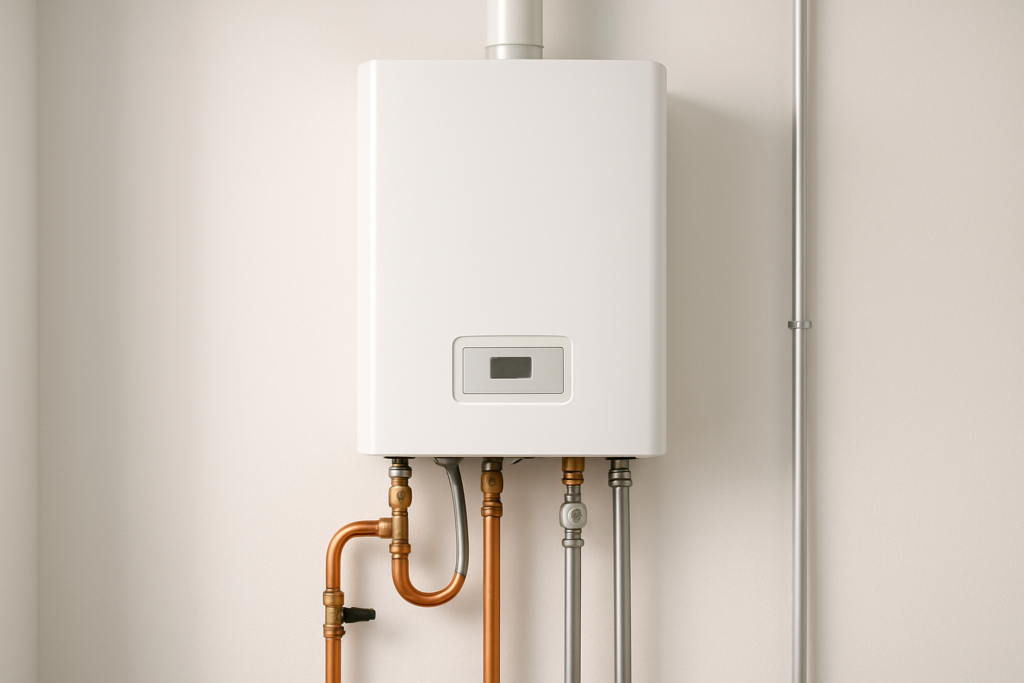
Tankless water heaters, whether gas or electric, typically last 15 to 20 years — often significantly longer. Because they don’t store water, they don’t experience the constant mineral sediment buildup that shortens tank life. The main maintenance requirement is annual descaling of the heat exchanger in hard water areas.
The trade-off is a higher upfront cost: installed tankless units typically run $3,000 to $5,000 in Toronto, compared to $1,200 to $2,000 for a mid-range tank unit. Over a 20-year period factoring in energy savings and replacement frequency, tankless often comes out ahead for households that use significant hot water.
Heat Pump Water Heaters
Heat pump water heaters, which extract heat from ambient air to warm the water, last 10 to 15 years and are significantly more energy-efficient than standard electric tanks. They require more space (they need airflow around them) and a higher upfront cost, but ongoing operating costs are notably lower. They’re less common in Toronto but growing in adoption as electricity rates rise.
How Toronto’s Hard Water Shortens Water Heater Life
Toronto’s municipal water has moderate to high hardness — typically in the range of 120 to 180 mg/L, depending on the area and season. This isn’t harmful to drink, but for water heaters it means one thing: faster sediment buildup.
Calcium and magnesium minerals in hard water precipitate out of solution when heated. Over time they settle at the bottom of a tank as a hard, chalky layer. This layer:
- Insulates the water from the heating element, forcing the heater to work harder
- Creates hot spots in the tank bottom that accelerate corrosion
- Reduces the effective storage capacity of the tank
- Causes the rumbling and popping sounds many homeowners hear from aging tanks
A tank water heater that is never flushed in Toronto’s water conditions may show significant performance decline by year 6 or 7 and fail by year 9 or 10. The same unit flushed annually may reach 12 years without significant issues.
How to Find Your Water Heater’s Age
The manufacture date is encoded in the serial number on the rating plate, usually on the side or front of the tank. The encoding format varies by manufacturer:
- Bradford White: The first letter represents the year (A=1984, B=1985, and so on cycling through). The next two digits are the week of manufacture.
- Rheem / Ruud: The first four digits of the serial number are the year and week (e.g., “2315” = 23rd week of 2015).
- A.O. Smith: The first letter is the decade, the second letter is the year within that decade.
If the age is unclear, a plumber can often tell you from the model and other markings. If the unit predates 2010, it is old enough to plan for replacement.
Signs Your Water Heater Is Nearing the End
Beyond age, watch for these indicators that a heater is in its final stage of useful life:
- Hot water supply that runs out significantly faster than it used to
- Rusty or discoloured hot water (indicates tank corrosion)
- Moisture or pooling at the base of the tank
- Rumbling, banging, or popping sounds during heating cycles
- Inconsistent water temperature
If you are experiencing two or more of these, the heater should be assessed by a plumber before it fails completely.
Tank vs. Tankless: Which Makes More Sense in Toronto?
For most homeowners:
Replace with a tank unit if: you want lower upfront cost, your household’s hot water demand is modest (1 to 2 people), or you plan to sell the home within 5 years. A quality tank unit is reliable, straightforward to maintain, and widely understood by all plumbers.
Consider tankless if: your household has high hot water demand (3 or more people, frequent simultaneous use), you plan to stay in the home long-term, or energy costs are a priority. The payback period on a tankless unit is typically 6 to 10 years in Ontario at current gas and hydro rates.
One important Ontario note: Natural gas tankless water heaters require a TSSA-licensed contractor for installation and must be registered with Technical Standards and Safety Authority (TSSA). This is not optional — it affects your home insurance and is required for any future sale inspection. Make sure whoever installs your unit can provide TSSA credentials and pull the required permit.
The Rental Tank Program: Is It Worth It?
Many Toronto homeowners have rented water heaters through Enercare (formerly Union Gas/Direct Energy) for decades. The monthly cost seems small, but over a 10-year period, most homeowners pay significantly more than the cost of purchasing and installing a comparable owned unit.
If you are currently renting a water heater, it’s worth calculating the total monthly cost including the rental fee and any service fees, then comparing it to the total cost of ownership for an equivalent unit. For most homeowners who plan to stay in their home more than 5 years, ownership makes more financial sense.
Book a Water Heater Assessment
ED Plumbing provides water heater inspections, replacements, and installations throughout Toronto and the GTA. Our TSSA-licensed plumbers can assess your current unit and recommend whether repair or replacement makes more sense — including an honest comparison of tank vs. tankless options for your household.
Call (437) 260-6342 to book a same-day assessment.