
Water leaks you can see are easy to deal with. The ones hiding behind walls, under floors, or beneath your foundation are the real problem.
A hidden leak can waste thousands of litres of water before you notice anything is wrong. By the time visible damage appears — bubbling paint, warped flooring, or a mould outbreak — the leak may have been running for months. In Toronto, where many homes have aging cast iron or galvanized steel plumbing, slow hidden leaks are one of the most common calls we respond to.
Here are eight warning signs most homeowners miss.
1. Your Water Bill Has Gone Up for No Reason
A sudden spike in your water bill is one of the earliest signs of a hidden leak — and one of the easiest to confirm. Toronto Water bills monthly. If your usage has jumped but your habits haven’t changed, that water is going somewhere.
Compare your bill to the same month last year. An unexplained increase of 20% or more is worth investigating before the next billing cycle.
2. You Can Hear Running Water When Nothing Is On
Stand in your home with all appliances and taps off. Listen near walls, floors, and under sinks. A faint hissing, dripping, or trickling sound can indicate water escaping through a pipe it shouldn’t be leaving.
Older homes in Toronto’s east end and Scarborough commonly have corroded pipes that develop pinhole leaks — these often produce a faint sound long before any visible damage appears.
3. Your Water Meter Is Moving With Everything Off
This is the definitive home test for a hidden leak:
- Turn off every tap, appliance, and water-using fixture in your home.
- Locate your water meter — usually in the basement near the main shutoff valve.
- Note the exact reading or take a photo of the dial.
- Do not use any water for 15 to 30 minutes.
- Check the reading again.
If the meter has moved, you have a leak somewhere on your property. If the movement is significant, the leak is serious and should be dealt with immediately.
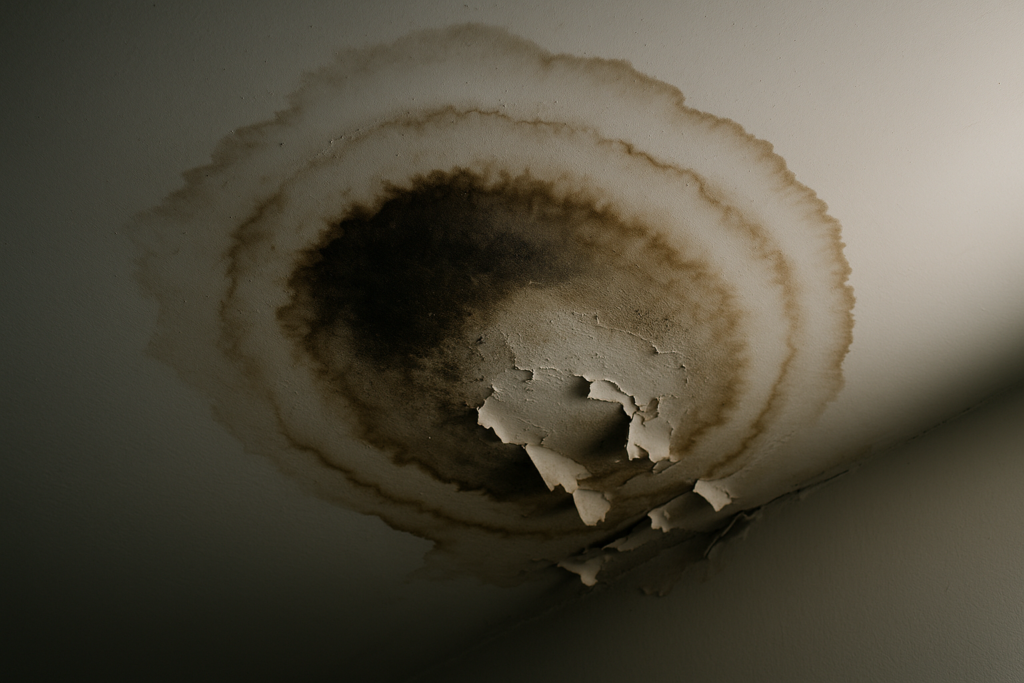
4. Damp Spots or Staining on Walls and Ceilings
Brown or yellow staining on a ceiling usually means water has pooled above it. Damp patches on walls — especially if they appear and disappear — indicate water moving through the wall cavity.
These stains don’t always appear directly above or behind the source. Water travels along joists and framing before it drips, so the visible damage can be several feet away from the actual leak.
5. Mould or Mildew in Unexpected Places
Finding mould under a leaking kitchen sink is expected. Finding it on an interior bedroom wall with no obvious water source is not.
Persistent mould — the kind that keeps coming back after you clean it — almost always means moisture is being continuously supplied from behind the surface. In Toronto’s humid summers and dry winters, indoor mould spreads quickly and becomes a health concern, particularly for children and anyone with respiratory conditions.
6. A Musty Smell That Won’t Go Away
Mould and mildew have a distinctive smell: earthy, damp, and slightly stale. If one room consistently smells that way even after cleaning and airing it out, moisture is likely trapped somewhere nearby — behind drywall, under flooring, or inside a ceiling cavity.
A smell without any visible mould usually means the growth is hidden. Don’t ignore it.
7. Soft Spots, Warping, or Buckling in Floors
Water sitting under hardwood or laminate flooring causes it to buckle upward or develop soft spots. Areas that give slightly underfoot — particularly near bathrooms, under the kitchen sink, or along exterior walls — are worth looking at closely.
In bathrooms specifically, soft flooring near the toilet base or around the tub surround is a strong sign of a slow leak at the wax seal or bath connection.
8. Noticeably Low Water Pressure
If your water pressure has dropped — showers feel weaker, taps are slower — water may be escaping the supply line before it reaches your fixtures. In older Toronto homes where pipe corrosion is common, pressure loss combined with any of the above signs makes a hidden leak significantly more likely.
What to Do If You Suspect a Hidden Leak
Start with the meter test described above. If the meter moves with everything shut off, the leak is somewhere on your side of the main shutoff — not the city’s responsibility.
Check the easy places first: under all sinks, around the toilet base, under the dishwasher, at the water heater inlet and outlet connections. These account for the majority of household leaks.
If you can’t find it, call a licensed plumber. Don’t wait. Water damage compounds fast — a small leak left for a month causes far more damage (and costs far more to repair) than the same leak caught early. TSSA-licensed plumbers have acoustic listening equipment to pinpoint leaks without unnecessary wall openings.
ED Plumbing is available 24/7 throughout Toronto and the GTA. If you suspect a hidden water leak, call us at (437) 260-6342. Our TSSA-licensed plumbers locate and repair leaks the same day.