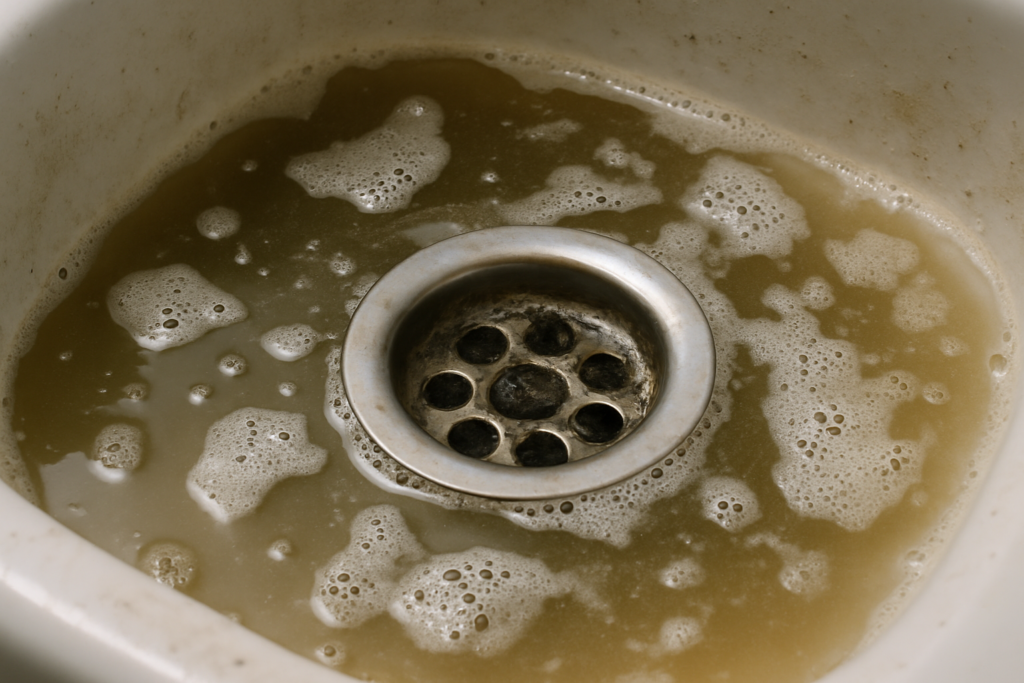
Most clogged drains can be cleared without calling a plumber — if you use the right method. The problem is that the most popular solution, chemical drain cleaners like Drano, causes more long-term damage than most homeowners realize. And the wrong tool for the wrong type of clog makes things worse.
This guide covers effective drain clearing methods that won’t damage your pipes, organized by drain type and clog severity.
Before You Start: Identify the Drain Type
The right approach depends on which drain is blocked and what’s causing it.
Kitchen sink: Almost always grease and food debris. Grease congeals on pipe walls and accumulates over months. Hot water helps, harsh chemicals don’t.
Bathroom sink or tub: Almost always hair and soap scum. Hair binds around drain stoppers and catches everything else that flows past it.
Toilet: Usually a blockage in the trap — the curved section immediately after the bowl. Toilets should only ever be cleared with a toilet-specific plunger or auger, not chemicals.
Floor drain or laundry drain: Can be anything. Start by checking if multiple drains are slow — that usually indicates a main line issue, not a localized clog.
Method 1: The Right Plunger
A plunger is the correct first tool for most clogs. But there are two types, and using the wrong one reduces effectiveness significantly.
Cup plunger (flat-bottomed): For flat surfaces — kitchen and bathroom sinks, bathtubs. The flat cup seals against the flat drain opening.
Flange plunger (with a rubber extension): For toilets. The flange fits into the toilet drain opening to create a proper seal. Using a cup plunger on a toilet is ineffective because it doesn’t seal properly.
To plunge effectively:
- Make sure there is enough water in the basin to cover the cup (add water if needed).
- Place the plunger over the drain and push down slowly to expel air, then create a seal.
- Pull up sharply — the suction clears the clog more than the push.
- Repeat 10 to 15 times before checking if the drain has cleared.
Method 2: Boiling Water (Kitchen Grease Only)
For kitchen drains with grease buildup, pour a full kettle of boiling or very hot water directly down the drain slowly, in two or three stages with a 30-second wait between each. The heat melts the grease, which then flows further down the line.
Important limitation: This only works on metal pipes (copper, cast iron, steel). Do not use boiling water on PVC plastic pipes — it can soften and warp the joints. Most homes built after 1980 in Toronto have PVC drain lines under sinks.
If you’re not certain what type of pipes you have, use hot tap water instead of boiling water. Still effective for grease, safer for all pipe types.
Method 3: Baking Soda and Vinegar
This combination is mild enough to use on any pipe type and effective for light to moderate clogs.
- Pour half a cup of baking soda down the drain.
- Follow with half a cup of white vinegar.
- Cover the drain and let the reaction work for 15 to 30 minutes.
- Flush with hot water.
The fizzing action breaks down light organic buildup and soap scum. It is not strong enough for a severe blockage, but it works well as a maintenance flush or for early-stage clogs.
Method 4: The Drain Snake (Auger)
For clogs that don’t respond to a plunger, a manual drain snake is the next step. A basic 15-foot snake from a hardware store handles most residential sink and tub clogs.
- Feed the snake into the drain, rotating the handle clockwise as you push.
- When you feel resistance, you’ve reached the clog — continue rotating to work through it or hook it.
- Pull back slowly, bringing the clog material with you.
- Flush the drain with hot water.
For bathroom sinks: remove the pop-up stopper first (usually just a matter of lifting and rotating). Most hair clogs are caught right there on the stopper mechanism, and removing them by hand is faster than snaking.
Why Not to Use Chemical Drain Cleaners
Drano, Liquid-Plumr, and similar products work by generating heat through a chemical reaction that dissolves organic material. The problems:
- The same heat that dissolves the clog also accelerates corrosion on metal pipes and can warp PVC joints.
- If the chemical doesn’t fully clear the clog, it sits in the standing water above the blockage, continuing to act on the pipe. The longer it sits, the more damage it does.
- It is genuinely dangerous — chemical drain cleaners are caustic enough to cause serious burns on skin and eyes, and the fumes in an enclosed space (under a sink cabinet) are harmful.
- They are ineffective against physical blockages like hair clumps or solid objects.
The one scenario where a drain cleaner might be appropriate: a very light grease buildup in an all-metal drain line, used quickly and flushed immediately. In most household situations, a plunger or snake does the job better and without the risk.
When to Call a Plumber
Call a plumber if:
- Multiple drains in the house are slow simultaneously — this indicates a main drain line blockage, which requires a professional-grade electric snake or hydro jetting
- The clog returns within a week or two of being cleared — it indicates a deeper problem in the line
- You have a drain that hasn’t fully cleared after plunging, snaking, and hot water
- There is a sewage smell coming from the drain — this can indicate a blocked vent stack or a more serious sewer line issue
Attempting to snake a main line without the right equipment often makes the problem worse by pushing the clog further into a section that’s harder to reach.
Need a Hand?
If the DIY methods haven’t worked, or if multiple drains are running slow, ED Plumbing handles drain clearing throughout Toronto and the GTA. We carry professional-grade equipment for everything from a simple kitchen sink clog to a blocked main sewer line.
Call us at (437) 260-6342 — same-day service available.