
A frozen pipe in a Toronto home is a race against time. When water freezes inside a pipe, it expands with roughly 2,000 pounds of pressure per square inch — enough to split copper, crack cast iron, and blow PEX fittings. The moment the pipe thaws, that pressure releases as a burst. You may have minutes, or hours, depending on how much of the line is frozen and where.
This guide tells you exactly what to do — and more importantly, what not to do — when you discover frozen pipes in your Toronto home.
Signs You Have a Frozen Pipe
- No water from one or more fixtures when it worked yesterday
- Frost visible on an exposed pipe in the basement, crawlspace, or garage
- Unusual bulging in a section of pipe (the pipe is already under pressure)
- Strange odours from taps — a blockage can trap sewer gases
- Extremely slow trickle when you expected full pressure
In Toronto, frozen pipes most commonly occur in exterior wall cavities (especially on north-facing walls), unheated crawlspaces, garage utility lines, and anywhere a pipe runs near an unsealed foundation crack where cold air infiltrates.
Step 1: Shut Off Your Main Water Valve — Right Now
Before you do anything else, find your main shutoff valve and turn it off. In most Toronto homes, it’s located in the basement near the front foundation wall, close to where the water service enters the house. If you have a ball valve, a quarter-turn closes it. If you have a gate valve (a wheel-style handle), turn it fully clockwise until it stops.
Why this matters: If the pipe has already cracked — even a hairline fracture — it will burst the moment it thaws. With the main off, a burst becomes a damp spot instead of a flooded basement.
Step 2: Open the Affected Tap
Open the tap that the frozen pipe feeds. This releases pressure in the line as the ice thaws and gives the water somewhere to go as you warm the pipe. Keep it open throughout the thawing process.
Step 3: Apply Gentle, Even Heat
The goal is to thaw the pipe slowly and evenly. Rapid heating causes the expanding ice to crack the pipe before the water has anywhere to drain.
Safe methods:
- Wrap the frozen section with an electric heating pad on the lowest setting
- Aim a hair dryer at the frozen section, starting at the tap end and working toward the blockage
- Apply warm towels soaked in hot water, replacing them as they cool
- Use a portable space heater to warm the room if the pipe is accessible
Never use:
- An open flame (torch, propane heater) — this is the leading cause of house fires in frozen pipe situations
- A heat gun on high setting — too rapid, too uneven
- Boiling water poured directly on pipes — thermal shock can crack the pipe or solder joints
When to Stop and Call a Plumber
Stop your DIY thawing immediately and call a licensed plumber if you encounter any of the following:
- You can’t locate the frozen section — it’s inside a wall, ceiling, or slab where you can’t safely apply heat
- The pipe has visible cracking, bulging, or deformation — it’s already compromised and will burst on thaw
- Water starts appearing when you expected none — the pipe has already cracked somewhere upstream
- The frozen section is near your electrical panel, furnace, or gas lines — heat application near these requires a professional
- Multiple fixtures are affected at once — this indicates your main service line may be frozen, which requires professional thawing equipment
- Nothing is thawing after 30 minutes of applying heat — the blockage may be longer than expected or in an inaccessible section
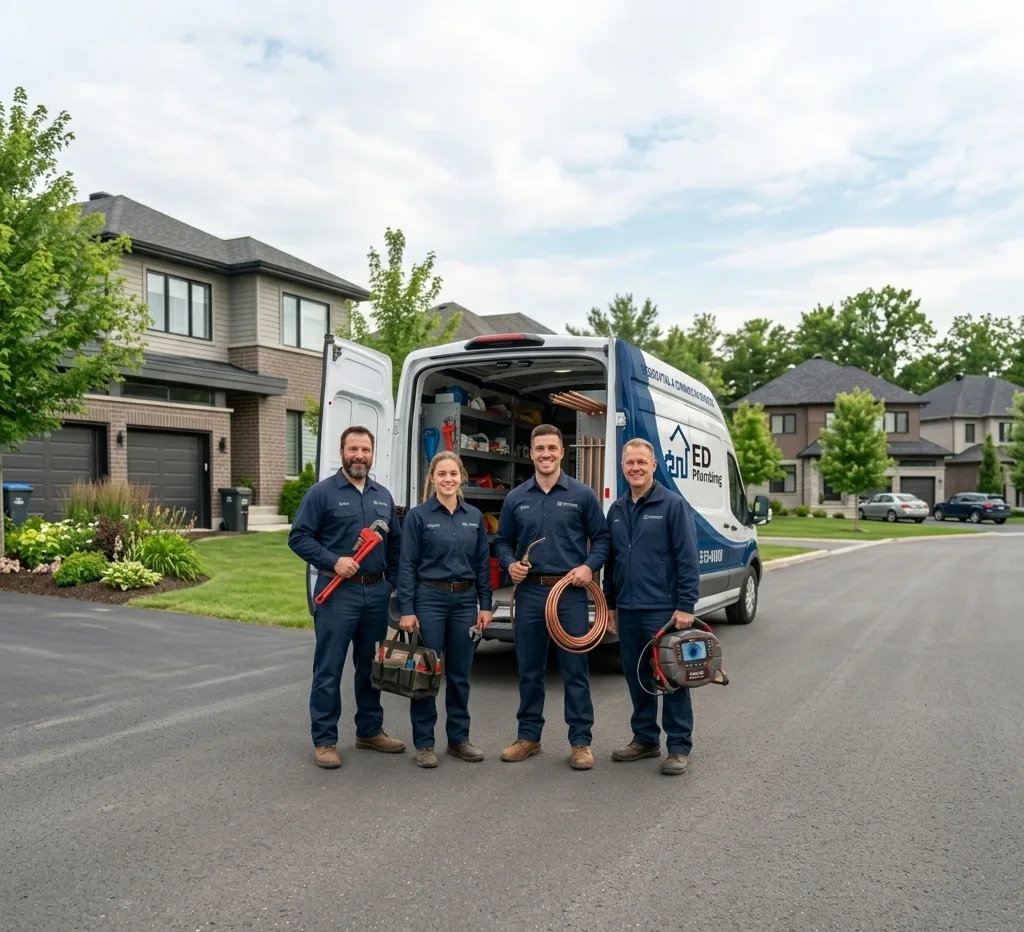
ED Plumbing carries professional pipe thawing equipment for in-wall and underground frozen pipe situations that can’t be reached with a hair dryer. We use low-voltage electrical thawing units that heat the pipe from inside the metal — safe, controlled, and fast.
After the Pipe Thaws: What to Check
Once water flows again, don’t assume the job is done. Do these checks before considering it resolved:
- Walk every wall that had a frozen pipe and look for damp spots, water stains, or peeling paint — signs of a slow leak behind the drywall
- Check your water meter — turn off all taps and watch the meter for 5 minutes. Any movement means you have a leak somewhere
- Check the affected fixtures — reduced pressure after thawing can indicate a partial crack that’s weeping inside the wall
- Inspect accessible pipe sections for hairline cracks, especially at joints and fittings
How to Prevent Frozen Pipes in Toronto Winters
Toronto’s winters regularly hit −15°C to −20°C with wind chill, which can freeze an uninsulated pipe in an exterior wall within 4–6 hours. Prevention is far cheaper than the repair.
- Insulate pipes in exterior walls and unheated spaces — foam pipe insulation costs $3–$5 per metre at any hardware store
- Seal cold air gaps near pipes — a can of spray foam on foundation cracks, rim joist gaps, and exterior wall penetrations makes a significant difference
- Leave cabinet doors under kitchen sinks open on very cold nights to let heated air circulate to the pipes
- Let a thin trickle run from vulnerable taps during −20°C nights — moving water doesn’t freeze as easily as standing water
- Keep your home above 15°C when away — the minimum temperature to prevent freezing in a typical Toronto home
- Disconnect and drain garden hoses before November — water left in the hose bibb can freeze back into the supply line
The Cost of a Frozen Pipe Repair in Toronto
If a frozen pipe bursts before it can be thawed safely, the repair costs scale significantly depending on where the break is:
- Exposed pipe section (basement, utility room): $200–$450 for pipe section replacement
- In-wall pipe: $500–$1,200 depending on drywall access required
- Main service line (underground, exterior): $1,500–$4,000+ depending on depth and length
- Resulting water damage: separate from plumbing repair — get a water damage restoration company involved immediately
The plumbing repair is often less expensive than the water damage remediation. This is why shutting off the main the moment you suspect a frozen pipe is the most important step you can take.
ED Plumbing — Toronto’s Frozen Pipe Specialists
Our technicians respond to frozen pipe calls across Toronto and the GTA year-round, but the November–February window is when we’re busiest. We carry professional pipe thawing equipment on every truck during cold months and offer same-day response.
If you have a frozen pipe you can’t safely reach, or if you’ve found water after a thaw, call us at (437) 260-6342. We’ll walk you through the situation on the phone and dispatch a licensed plumber if needed — usually within 45 minutes anywhere in Toronto.
Related: Emergency Plumber Toronto | Pipe Repair Services | Leak Detection